Friday, December 9, 2011
Cordoba - World Heritage site
Cordoba, founded in 1599. The Jesuits built a dazzling cathedral, a monastery and crypt here. Their mission was to spread the Gospel of Jesus Christ and to educate the people. They were very successful and this city remains the higher education center of Argentina. The city hall complex is also magnificent as are many ancient buildings surrounding it. In 2000 UNESCO declared this entire city center as part of the "Humanity Cultural Heritage of the World." For the men and women and children we saw worshipping in the church and praying in the surrounding areas, this is a living Christ centered space that brings us Joy and thanksgiving. To God be the glory.
Thursday, December 8, 2011
People enjoying the Rio Parana
According to our guide the Parana is over 57 kilometers wide at Rosario and is crossed by 14 bridges. You can see the one bridge is probably over 2 kilometers from the mainland to the first island. This is a gigantic river than flows south from Brazil and empties into the Rio Platte at Buenos Aires and then into the Atlantic.
Rosario
Rosario is the Chicago of Argentina. It is a dynamic city with a huge port, an international grain and beef export operation and a history of mafia crime bosses. The third largest city now, over 1 million people call this home and are proud "Rosarians." We went on a guided tour and the guide from the Pampas Tour agency was great. He lived for 20 years in Spain, for 3 years in London and he is an English teacher. He took us to the park and took this photo of a beautiful flower calendar that is maintained daily by a local school. During the tour he told us of all the history of this great city. The mafia boss was actually acquainted with Al Capone. Over 50% of the population are of Italian ancestery. The national flag was designed here and they are very proud of their heritage. There is some monumental architecture to commorate their various battles and a gigantic marble "ship of state" representing the ongoing movement of the nation. Actually the architecture reminded us of Berlin in the 1930's and there are a number of Germans here. The largest brewery in the country was founded by German immigrants here.
Still, there was more than a little sadness in the history and the present time is full of uncertainty. He showed us the prison where thousands of liberals were tortured, murdered and "disappeared" during the bad years of the dictatorship in the 1970's. He told us that the current mayor is a socialist and the city council is far far left of center. We saw some demonstrators and when we asked, what do they want? He said they say their welfare benefits are not big enough and they want the government to distribute cash so they can buy Christmas presents for their children. He was very concerned for his country, the economy, the joblessness and the uncertain future.
I asked him if he thought the economy was getting better. No he said, there is over 10% unemployment, some say as high as 20% and inflation is growing very fast, over 20% per year. One good measurement is tourism. He said less than 5% of the tourists here are from the US, most are from New Zealand, Australia, South Africa and Europe. His tour was over 2 1/2 hours long and he had a driver who spoke German and French. The guide himself spoke Italian, Spanish, English and Catalan. They were both well educated men, teachers and professional tourguides. The total cost of the tour was 250 pesos, that is about $65 and after you subtract their gas for all that driving, I calculate that each of them earned about $10 per hour.
He told us his son has gone to Spain for additional education, but there are no jobs for him either here in Argentina or in Spain.
We are living in difficult times, everything is so uncertain. He seemed friendly but frightened. And the recent reelection of Christina Fernandez de Kirchner as President does not give him any more confidence.
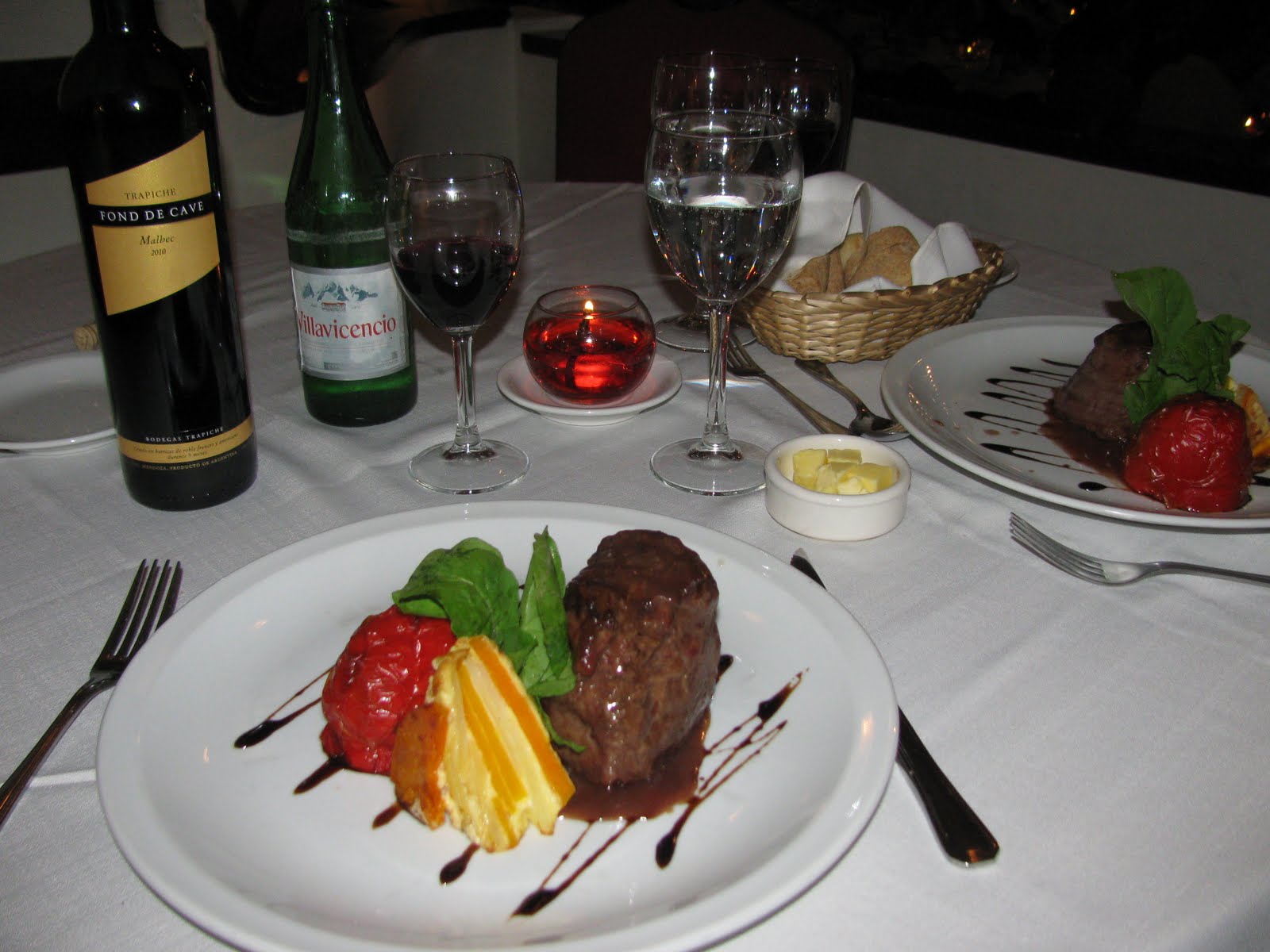
The city was pretty clean, nice buildings in the main areas, a great riverfront with sandy beaches and lots of people swimming and boating. Our hotel, the Plaza Real, was excellent and the food there was terrific and a bargain. Lomo de bife was only 57 pesos, that is tenderloin for $14 (and they served two steaks on the plate). Of course he had to enjoy a bottle of Salentein Malbec, 98 pesos, rich and memorable wine. It took us four hours to travel by bus from Buenos Aires to Rosario, the bus ride cost $15 each. A very nice place to visit, but there are so many time cities to visit here, we just keep coming back.
Tuesday, December 6, 2011
Recoleta reprise
We have written about the cemetary in Recoleta before. If you scroll down this blog to 2009 you will find a short history of this world famous graveyard. The tombs are so interesting that we could not resist a return trip. The photos are not adequate as the space is huge and the tombs are packed extremely close together. Famous people, dictators and their wives like Evita, sports heros like Luis Firpo the boxer and race car driver Juan Manuel Fangio, successful business men, the social elite of the nation are buried in this place. Even the dictator Facundo Quiroga was buried standing up near his former rivals, men he had executed. The history of Argentina in a two acre walled cemetary.
Walls, windows and doors in Colonia
December 6, 2011
Before we leave for Rosario, here are a few more photos of the beautiful Colonia del Sacramento. Founded in 1680 by the Portugese, it was highly sought and fought over by the Spainards and the original walled fortifications still stand. The entry portal looks like it was transported from Portugal, complete with a 330 year old crest above the door. The low buildings, made of stone, brick and with red tile roofs are in a style known as "Portugese" and are surrounded by sycamore trees. The town now survives on tourism and after the collapse of the Argentine economy in 2001 the town suffered badly. Now the economy is doing well in Argentina and the hoards of tourists arrive with cameras every day. We stayed overnight and there were few tourists as we walked the streets in the evening and early the next day. The fruit and wine are excellent. A delightful town to explore.
Monday, December 5, 2011
Colonia del Sacramento
December 4-5, 2011
Today we write from Colonia del Sacramento, Uruguay. It only took one short hour on the Buquebus boat to cross the Rio Plata to travel from Buenos Aires to this quaint old town that is a World Heritage site. After we settled into the beautiful Radisson hotel, we strolled through the ancient cobbled streets to the old part of town. There were inviting restaurants with outdoor seating lining the plaza and stone buildings alongside narrow streets. We chose the Santa Rita that overlooked the Rio Plata with a table set under a giant palm tree. We had the perfect spot for people and car watching. We saw several old antique cars today. You see, cars do not easily die in Uruguay. Vehicles that would be considered scrap anywhere else in the world are needed here for transportation. We learned that new cars can cost more than a house due to government import tax policies. Economic decline and government policies that include high excise taxes, customs duty, luxury taxes, supercharges for any new car purchase made it impossible for the 99% to buy a new car. So as in Cuba a car is repaired and maintained to last as long as possible. As a result there are lots of cool antique cars that have been lovingly refurbished in this little town. We even found a couple of 60-80 year old cars marking the entrance to the aquarium and a restaurant. One was parked permanently and turned into a flower planter. After a late lunch, our afternoon was spent lounging around the beautiful swimming pool and patio with Kindles in hand. Quite frankly, much as we love Buenos Aires, it has been nice to take a break from the city.
Saturday, December 3, 2011
Japanese Garden
December 3, 2011
Buenos Aires has a Japanese Garden and it is lovely. It was created as a gift from the people of Japan and was expanded when the young crown prince and his wife came here for a visit. We needed the quiet beauty of this place for we had just been crushed by the crowds of people at the bus terminal. We walked from our hotel all the way to the Retiro Omnibus station to buy our bus tickets for the first stage of our journey across the continent. The station is next to the train depot and the mass of humanity reminded us of Grand Central Station in New York. It was hard to walk with so many people pushing and shoving but we finally found our bus ticket office and bought the tickets. Then we went to the Japanese Garden for some rest and calm. It is an oasis in a bustling metropolis. A wonderful place of plants and trees, water, bridges, paths, sculptures and happy people.
Tango Show
December 2, 2011 Day 4
Last night we went to a dinner theatre tango show on Florida Street. Unfortunately, no photos were allowed during the performance. It rivaled a NY Broadway production. The musicians were outstanding. This show did not focus on the lewd moves often associated with tango. Don´t get me wrong, there was plenty of close body contact. The lifts and speed of the dancers was incredible. Somehow the women seemed to dance on air. There was a kind of ballroom quality in their presentation. Oh yes, there were speedy leg kicks and the dancers did invade each other´s space at times. These precision leg kicks required careful placement.
Two men dressed as Gauchos gave a great series of dances, reminiscent of the days when men spent months on the Pampas, with no women and had to entertain themselves by dancing for each other after supper. They were real athletes, acrobatic high speed: a tap dance in boots. But this show was a big time production and had a different look than the dances we saw performed two nights ago at the Café Tortoni. There it was a smaller, intimate stage and the two dancers relied on flirtatious looks and sexy costumes in their choreography. Here a dozen highlytrained pros showed the many varieties of tango style. The musicians, two
violins, two bandolinos, a piano, a bass and two excellent singers, were all topnotch. A wild, fun and fantastic evening.
I have always wondered how the tango made its way from the brothel to the ballroom. It took time. Initially, Argentine families of good
reputation wanted no part of this cheek to cheek dance. It took years to make its way to the middle and upper class family home. But overtime boys of these families would sneak off to the milangos looking for adventure. They learned to dance there and would then teach their sisters, cousins or female neighbors a purified version of the tango. Being a good dancer soon became a way to impress the ladies and I think that is probably still true.
The city of Buenos Aires was rebuilt between 1880 and 1930. The old Spanish city with narrow streets and one story buildings was
replaced with French architecture, wide boulevards and gorgeous parks. Argentina became one of the richest nations in the world. The wealthy families from Argentina would travel to Europe and some kept homes there. The tango was introduced to Parisian society. A tango dance craze then spread to London, Rome and New York. Finally, the tango returned to Buenos Aires with the dancers dressed in a tuxedo. That was the version of the dance we saw last night and it was sophisticated, complicated and interesting. Not only that, my tenderloin steak was fabulous. We got to bed at 1 AM. Our nights on the town are getting later and
later. We almost missed breakfast this morning!
Piazzolla Tango
The critics for the local newspaper write that the Piazzolla Tango show has both the best food and the best tango dancers. The show was great and the food was memorable. The lomo, or tenderloin, was the biggest one we ever have seen. It was also the best one I recall ever eating. The Argentine beef deserves to be part of the story.
Friday, December 2, 2011
Fruit stalls in Palermo Soho
Day 5 December 2, 2011
Today we walked for miles around Palermo Soho, visited fruit stalls to check the quality of the apples, pears and cherries.
The new crop of cherries from Mendoza has arrived. Some of the crates looked like mixed quality, color not consistent, but the size was pretty good. The price was 25 pesos for a kilo. At the current exchange rate of $1 US = 4.27 pesos, that is nearly $3.00 per pound, an expensive treat. The Granny Smiths looked great and there was a lot of competition from tropical fruits. It is always interesting to see how fresh fruit is displayed in different countries. Here the stalls are very clean and decorated with flowers, baskets and dried fruit and nuts.
We found a crafts fair at Serrano Plaza and looked at all the merchandise. We ate a few empanadas and then walked all the way to the Plaza Italia. Fascinating neighborhood of upscale clothing designers and shops. Gail loved the clothes and the childrens toy stores. The attitude is counterculture and anti-establishment, but the young people are all fast paced and fashionista a la NYC. Palermo Soho, south America with an attitude.
Later in the day we had to move to a different hotel, the Intersur Recoleta. It is just two blocks from the Etoile, but we only reserved four days there and that hotel was fully booked and so we are now in a brand new hotel. If Gail had been in charge of planning we would have the entire trip scheduled, booked and prepaid. I am a more spontaneous traveller and as long as she will let me, we will move from hotel to hotel, town to town, as the spirit moves us. Keep you posted.
Thursday, December 1, 2011
Ligure seafood restaurant
Day 4 December 1, 2011
One of our favorite restaurants in Buenos Aires is Ligure. We found it on our first trip in 2007 and have returned every visit. This is a city of beefeaters, and Ligure does have plenty of meat dishes, but it is really a seafood restaurant and after a few days of red meat it is nice to visit a supurb seafood restaurant. It is on Juncal street, just a couple blocks from the San Martin plaza and an easy walk from the Marriott or the Sheraton. The fish is fresh and well prepared but the best quality of the restaurant is the staff.
Carlos Alberto first came to work here on August 1, 1978 as a "joven" or waiter. He is still here and has served us in 2007 and 2009. All of the other staff looked familier to us as we walked in today, but he came up and greeted us, a quizzical look on his face. After we ordered and he came back to fill our glasses, he asked "Quanto tiempo en BA?" I explained to him that we were on our third trip and that we had been to his restaurant, and have been served by him all three times. He smiled and said we looked familiar. A few minutes later he reappeared with a bottle of champagne and two glasses. He welcomed us as old friends and poured the champagne. I asked if we could take his photo and he smiled and said, "Si, como no?"
We had a beautiful fresh trout with baby shrimp and mushrooms and a fresh green salad, it is the beginning of summer here and the vegetables are excellent. We walked several miles back to our hotel, enjoying the sunshine and the happy people. What a great day to photograph the architecture and the "Porteneos" the "people of the port." Argentina. Carlos Alberto, muchas gracias. Nice
Street repairs and presidential elections
The traffic here is bad, millions of cars and dense blocks of mid rise buildings for miles. A street repair is a major inconvenience for drivers. The water system is good but every once in a while a pipe rusts, or cracks and repairs must be done. As an old water district lawyer, I have had several interesting cases involving leaking fire hydrants and expensive repairs so I always stop and look at the crews working on these projects.
The Argentines just had their national election in October. The president, Christina Kirchner was reelected with a 54% vote, impressive. She is a Peronist and is very supportive of working class people. Inflation is high, but union wages are rising fast enough to keep up with it. Argentina is not paying its bonded indebtedness, but neither is Greece and Italy, Spain and Ireland are on the same path. The international bond market does not appreciate her ideas, but her populist policies seem to be working at the moment and things are running smoothly (as long as the world needs the agricultural commodities Argentina produces).
So what does that have to do with street repairs? One of my informal measures is the number of men on the job and how many are working compared to how many are leaning on shovels or using their cellphones. Here the ratio today was two watching and one working. About the same as I would expect at home. Perhaps Barack and Christina are not really that different. Hope the US can pay our bonds off when they come due.
Just what is the proper ratio of watchers to workers? At least the workers are smiling.
Subscribe to:
Posts (Atom)